
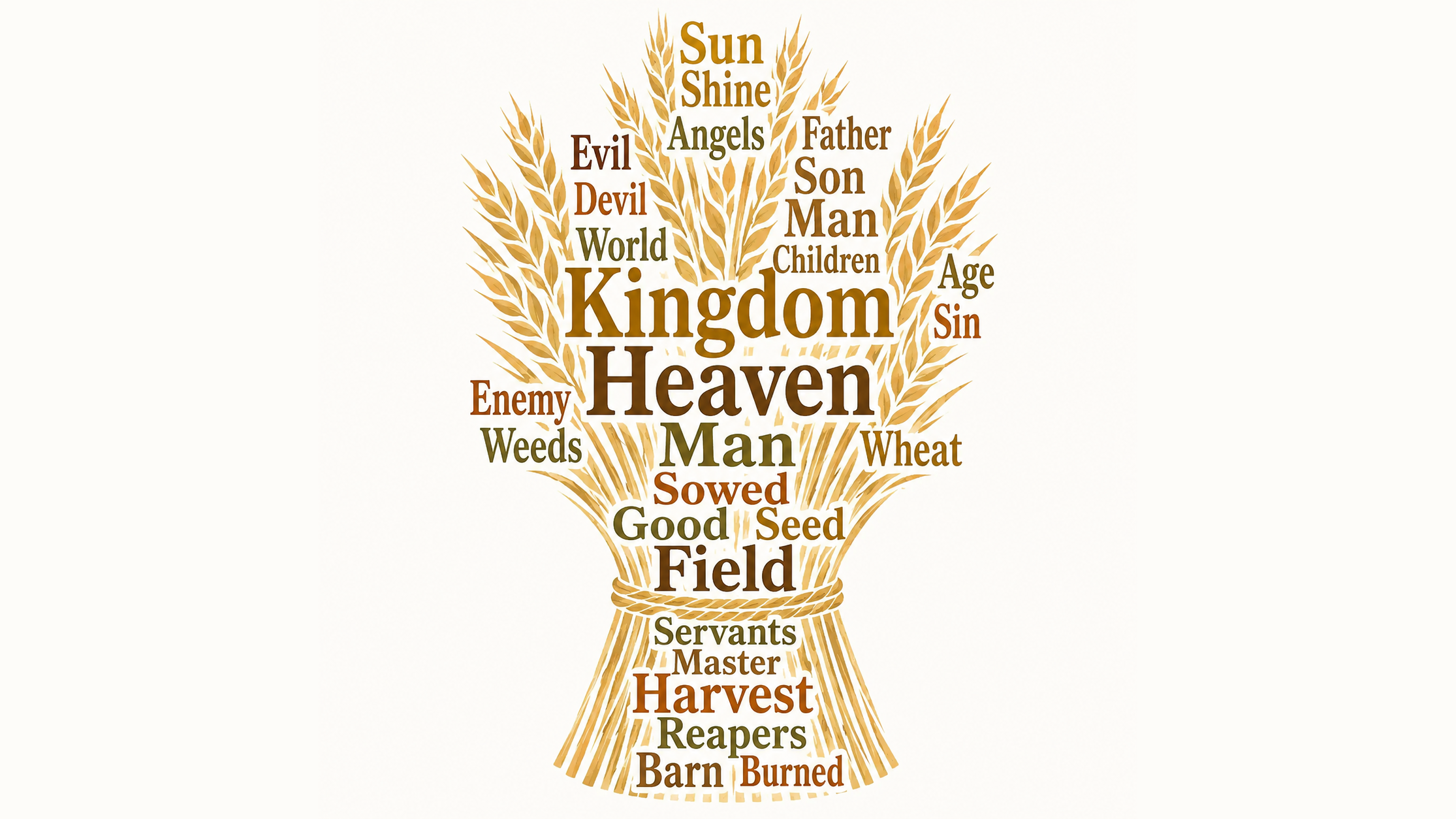
Matthew 13:24–30 and Matthew 13:36–43 speak to the ache of living in a world where good and evil grow side by side. Jesus tells a parable about a farmer who sows good seed in his field, only for an enemy to come at night and sow weeds among the wheat. When the plants begin to grow, the servants notice the problem and want to pull the weeds up immediately. The farmer stops them. If they pull the weeds too soon, they may damage the wheat. Instead, both are allowed to grow until the harvest.
This is one of Jesus’ kingdom parables, and it helps us understand why God’s justice often seems slower than we want. Many of us know what it’s like to look around and wonder why evil is allowed to remain. We see cruelty, dishonesty, violence, arrogance, and spiritual indifference, and we wonder why God doesn’t pull it all up by the roots. Jesus does not deny the presence of evil. He names it plainly. There is an enemy. There are weeds. There is real harm in the field. But He also teaches that God’s patience is not weakness. God is protecting the wheat while He waits for the harvest (France).
The parable is also a warning against human impatience and self-righteous judgment. The servants are eager to fix the field, but they don’t have the wisdom to separate wheat from weeds without causing damage. That belongs to the farmer. Jesus reminds His disciples that final judgment belongs to God, not to us. The Church is called to faithfulness, witness, mercy, and endurance. We’re not called to tear through the field deciding who’s beyond hope.
When Jesus explains the parable privately to His disciples, He makes clear that the Son of Man sows the good seed, the field is the world, the good seed represents the children of the kingdom, and the weeds represent the children of the evil one. The harvest is the end of the age, and the reapers are angels. Evil will not last forever. In the end, God will set things right, and the righteous will shine like the sun in the kingdom of their Father. This is both comfort and warning. God sees clearly. God waits mercifully. God judges justly.
Origin and Name
The Gospel takes its name from Matthew, also known as Levi, a tax collector
who became one of Jesus’ twelve disciples. That matters because Matthew’s own
calling reflects one of the Gospel’s central convictions: Jesus brings grace to
people others have written off. A tax collector becoming a disciple and witness
fits the larger story of a Messiah who calls sinners, heals outsiders, and
forms a new people by mercy (France).
Authorship
Early Christian tradition connects this Gospel with Matthew the apostle. The
Gospel itself does not name its author, but it shows deep knowledge of Jewish
Scripture, careful theological structure, and concern for the life and teaching
of the Church. It presents Jesus as the fulfillment of Israel’s story and the
authoritative teacher of God’s people (Keener).
Date and Setting
Matthew was likely written between AD 70 and 90, after the destruction of
the Jerusalem temple. Jewish and Christian communities were wrestling with
identity, authority, worship, and faithfulness in a changed world. Matthew
speaks into that setting by showing that Jesus is not a break from God’s
promises to Israel but their fulfillment (Davies and Allison).
Purpose and Themes
Matthew presents Jesus as Messiah, Son of David, Son of Abraham, Son of God,
and Immanuel. Major themes include fulfillment of Scripture, the kingdom of
heaven, righteousness shaped by mercy, discipleship, judgment, mission, and the
presence of Christ with His people. Matthew never separates grace from
obedience. Jesus calls people into mercy, forgiveness, transformation, and
faithful living.
Structure
Matthew weaves narrative and teaching together. The Gospel includes five
major teaching sections, often seen as echoing the five books of Moses. Jesus
appears as the greater teacher who fulfills and rightly interprets God’s will.
The Gospel moves from Jesus’ birth and identity, through His ministry and
teaching, into His suffering, death, resurrection, and final commissioning of
the disciples.
Significance
Matthew bridges the story of Israel and the mission of the Church. It shows
that God’s covenant promises continue through Jesus and now move outward to all
nations. The final scene in Matthew 28 does not close the story as much as it
opens the Church’s mission.
Matthew 13 is a chapter of parables. Jesus teaches about the kingdom of heaven through familiar images like seed, soil, weeds, mustard seed, yeast, treasure, pearls, and a fishing net. These parables reveal that God’s kingdom does not always arrive the way people expect. It begins quietly. It grows patiently. It is opposed by evil. It is sometimes misunderstood. Yet it is certain, precious, and unstoppable.
The parable of the wheat and weeds follows the parable of the sower. In the first parable, Jesus focuses on how different hearts receive the word of the kingdom. In this parable, He widens the lens. The issue is not only the condition of individual hearts but the mixed condition of the whole world. The kingdom is present, but evil still resists it. God is at work, but the world has not yet been fully healed (Wright).
Within the larger biblical story, this passage connects to the promise that God will one day judge evil and restore creation. The prophets often spoke of harvest as an image of judgment. Jesus uses that same image but adds a strong note of patience. God does not rush the harvest. He gives time. His delay is mercy, even when it’s hard for us to understand.
John Wesley would have heard this parable as both a warning and an invitation. Wesley believed deeply in God’s grace at work before we recognize it, calling every person toward repentance and life. The farmer’s patience reflects the mercy of God, who does not desire the destruction of sinners but their salvation. The fact that judgment is delayed means there is still room for grace, repentance, and transformation (Collins).
This passage also fits Wesley’s understanding of holiness. The wheat is not called to become weeds in order to survive among weeds. God’s people are called to grow faithfully where they are planted. Holiness is not withdrawal from the world. It is life shaped by grace in the middle of the world.
Wesley also warned against a harsh and judgmental spirit. Christians can become so eager to defend truth that they forget the patience and mercy of God. This parable reminds us that we don’t see hearts clearly enough to make final judgments. We can name evil. We can resist harm. We can practice accountability. But we cannot claim God’s seat as final judge.
The good news is that sanctifying grace keeps working in the field. God grows His people in patience, humility, courage, and love. The promise is not that the field will be easy. The promise is that the harvest belongs to God.
Matthew 13:24–26, Good Seed and an Enemy’s Work
Jesus begins with the kingdom of heaven. A man sows good seed in his field, but while everyone sleeps, an enemy comes and sows weeds among the wheat. The weeds were likely darnel, a plant that looked very much like wheat in its early stages. That detail matters because the problem could not be clearly seen at first. Evil often works that way. It hides, imitates, and confuses before its fruit becomes visible (Keener).
The good seed belongs to the farmer. The weeds come from the enemy. Jesus does not present evil as an illusion or as something God created. Evil is real, destructive, and opposed to God’s purposes. Yet the field still belongs to the farmer. The enemy acts, but he does not own the field.
Matthew 13:27–28, The Servants’ Question
The servants ask a question many faithful people still ask, “Master, didn’t you sow good seed in your field? Where then did the weeds come from?” Their confusion is honest. If God is good, why is the field so mixed? If the kingdom has come near, why is evil still present?
The farmer answers simply, “An enemy did this.” Jesus does not explain every mystery of evil in this parable, but He does make one thing clear. The presence of evil does not mean the farmer failed. It means there is opposition to the kingdom (France).
Matthew 13:28–30, Patience Until the Harvest
The servants want to pull up the weeds immediately. Their desire is understandable. They want a clean field. They want evil removed. But the farmer refuses because uprooting the weeds too soon could also uproot the wheat.
This is not a command to ignore evil or tolerate abuse. Scripture calls God’s people to protect the vulnerable, seek justice, and resist sin. But this parable warns against final condemnation and reckless spiritual sorting. Human beings are not wise enough to separate every heart without doing harm. God’s patience protects what He is growing.
The harvest will come. The weeds will be gathered and burned, and the wheat will be brought into the barn. Judgment is delayed, but it is not canceled. Grace is patient, but it is not indifferent.
Matthew 13:36, Jesus Explains the Parable
After Jesus leaves the crowd and goes into the house, the disciples ask Him to explain the parable. This private explanation shows that even sincere disciples need help understanding the kingdom. Jesus’ teaching is not always immediately obvious. Discipleship includes listening, asking, waiting, and receiving deeper instruction.
Matthew 13:37–39, The Meaning of the Field
Jesus identifies Himself as the sower of the good seed. The field is the world. The good seed represents the children of the kingdom, and the weeds represent the children of the evil one. The enemy is the devil, the harvest is the end of the age, and the reapers are angels.
This explanation keeps us from making the parable too small. The field is not only the Church. It is the world. God is growing His kingdom within the world, not apart from it. The people of God live among resistance, confusion, and opposition, but they are still planted by Christ (Davies and Allison).
Matthew 13:40–42, Judgment and the Removal of Evil
Jesus says that just as weeds are gathered and burned, so it will be at the end of the age. The Son of Man will send His angels, and all causes of sin and evildoers will be removed from His kingdom.
These are hard words, but they are not cruel words. A world without judgment would mean evil gets the final word. God’s judgment is the promise that abuse, injustice, deception, and destruction will not last forever. The love of God includes the defeat of everything that harms His creation.
Matthew 13:43, The Righteous Shine
The passage ends with hope. “Then the righteous will shine like the sun in the kingdom of their Father.” This image echoes Daniel 12:3, where the wise shine like the brightness of the heavens. Jesus points beyond the struggle of the present field to the glory of God’s completed kingdom.
The righteous do not shine because they made themselves holy. They shine because they belong to the Father and have been made new by grace. The final picture is not a field full of weeds. It is the people of God radiant in the kingdom of their Father.
This passage speaks honestly about the problem of evil. Christianity does not pretend the world is as it should be. Jesus names evil as real and destructive. At the same time, He teaches that evil is temporary. It may grow for a season, but it does not own the field and it does not control the harvest.
The parable also answers the charge that God’s patience means God is absent or uncaring. From a Christian view, divine patience is not neglect. It is mercy. If God judged the world instantly, none of us would stand. The delay of judgment allows time for repentance, healing, and transformation.
Philosophically, the passage recognizes a truth people still struggle with: quick judgment often causes unintended harm. Human beings are limited in what we see and understand. We can judge actions and protect people from harm, but we cannot see the whole story of a soul. Jesus places final judgment in God’s hands, where it belongs.
Theologically, this parable protects both God’s justice and God’s grace. Evil will be judged. The righteous will be gathered. The kingdom will be made whole. Until then, God’s people are called to faithful growth, not fearful control.
Many of us want God to fix the field right now. We want the weeds gone, the wrong made right, the pain ended, and the confusion cleared away. That longing is not wrong. It comes from knowing deep down that the world is not as God intends it to be.
But Jesus teaches us to trust the Farmer. God sees what we cannot see. God knows how to protect what He is growing. God’s patience gives space for repentance, including our own. The Church’s work is not to rip through the field with anger. Our work is to grow as wheat, bear good fruit, witness to Christ, protect the vulnerable, resist evil, and trust God with the harvest.
This parable also calls us to humility. We should be careful about deciding too quickly who is wheat and who is weed. Some people we might have written off are still being pursued by grace. Some of us have had seasons when we were harder to recognize as wheat than we’d like to admit. God’s mercy has been patient with us, and we are called to show that same mercy to others.
The promise of this text is not that evil will disappear today. The promise is that evil will not last forever. The Son of Man has sown good seed, and He will bring His harvest home.
Daniel 12:3
Matthew 3:12
Matthew 7:15–20
Matthew 13:47–50
Romans 2:4
2 Peter 3:9
Revelation 21:1–5
